
Shop Books
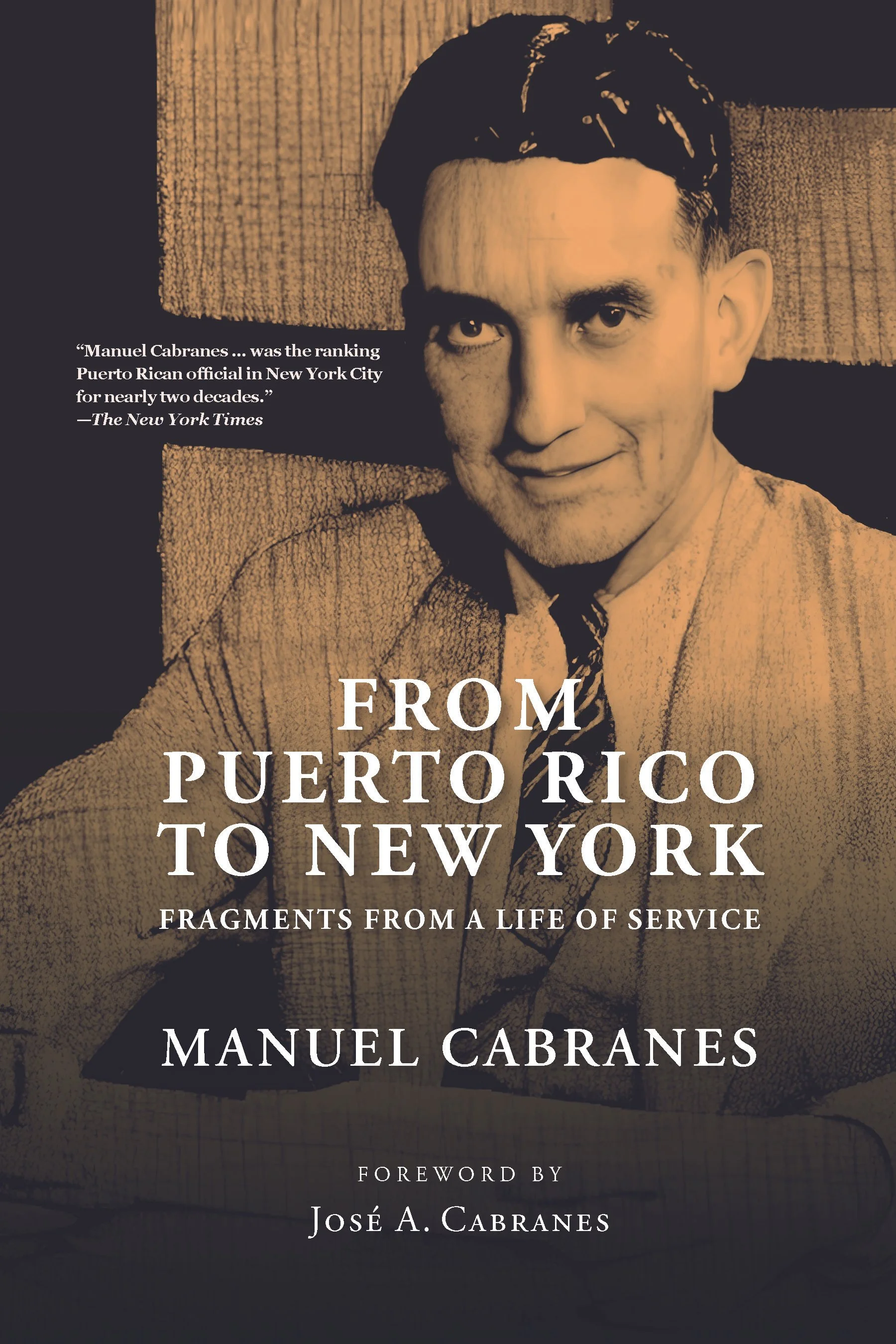
by Manuel Cabranes
Manuel Cabranes was, according to The New York Times, “the principal spokesman for the mass of poor Puerto Ricans” who came to New York City during the “Great Puerto Rican Migration.” Although “Nuyoricans” are now a community whose very nickname joins their identities and one now sits on the Supreme Court of the United States, Puerto Ricans were not initially greeted with open arms in New York City as their population grew following the Second World War. Migrants from the island to the City struggled for economic opportunity, social acceptance, and political influence. It was Manuel Cabranes who was “called upon to defend” his fellow Puerto Ricans “from attacks by opponents of the migration” “as the ranking Puerto Rican official in New York City for nearly two decades.”
Cabranes’s service as the first head of the Office of Puerto Rico in New York City and in various appointments in City government made him a critical conduit between the governments of his two homes. He was also cultural ambassador for his people in the City, helping build opportunity and understanding for them as a co-founder of the New York Puerto Rican Scholarship Fund and as leading Roman Catholic layman who was named by the Archdiocese of New York to lead the City’s celebration of Puerto Rico’s patron saint. His contributions as a pioneer in the field of social work and as public intellectual were felt in the City and on the island alike. Cabranes’s life and work would earn him respect from a broad coalition of both New Yorkers and Puerto Ricans—but would make him a target for assassination by extremists.
Drafted shortly before his death in 1984, these fragmentary remembrances shed light on the unique, unfamiliar, and misunderstood experience of the Puerto Rican diaspora in the twentieth century. They have been prepared for publication by Manuel Cabranes’s son, U.S. Circuit Judge José A. Cabranes—the first Puerto Rican appointed to a federal judgeship in the continental United States.
Hardcover: $28.99
6 × 9 in. (15.24 cm x 22.86 cm)
Perfect Bound
262 pages
57 artworks
Imprint: OctoberWorks
ISBN: 978-1-959262-13-8
LCCN: 2026930266
BISAC: BIO026000 [Biography & Autobiography / Personal Memoirs]; SOC044000 [Social Science/Emigration & Immigration]; HIS036140 [History/Caribbean & West Indies/Puerto Rico]; BIO002000 [Biography & Autobiography/Cultural Heritage]; BIO010000 [Biography & Autobiography/Political]

Psychosocial Challenges and Resilience Pathways Among Unaccompanied Children from Central America
by American Psychological Association Immigration Working Group
This report, Vulnerable But Not Broken, provides an overview on the myriad issues facing unaccompanied children from Central America apprehended at the Southwest border of the United States. The document highlights these children's ability to overcome challenging histories and adapt to the changes in familial and social environment that life in the United States presents, and identifies some of the key supportive resources that can help them to do so. The psychosocial aspects of this humanitarian crisis are reviewed, outlining priority areas for future research and providing recommendations for culturally and developmentally informed practice, programs, and legal advocacy.
AUTHORS
Manuel Paris, Jr., Psy.D.
Claudette “Claudia” Antuña, Psy.D., MHSA, LICSW
Charles Baily, Ph.D.
Giselle A. Hass, Psy.D.
Cristina Muñiz de la Peña, Ph.D.
Michelle A. Silva, Psy.D.
Tejaswinhi Srinivas, Ph.D.
PHOTOGRAPHY: Ruthie Abel, Let It Be The Dream It Used To Be, a collaborative photography project with unaccompanied children. © 2017 Ruthie Abel.
Perfect Bound List Price: $28.00
8 x 10 in. (20.32 x 25.4 cm)
Full color
100 pages
13 photos & information graphics
ISBN: 978-1-7234443-8-8
BISAC: PSY050000 [Psychology/Ethnopsychology]; PSY002000 [Psychology/Developmental/Adolescent]; PSY004000 [Psychology/Developmental/Child]
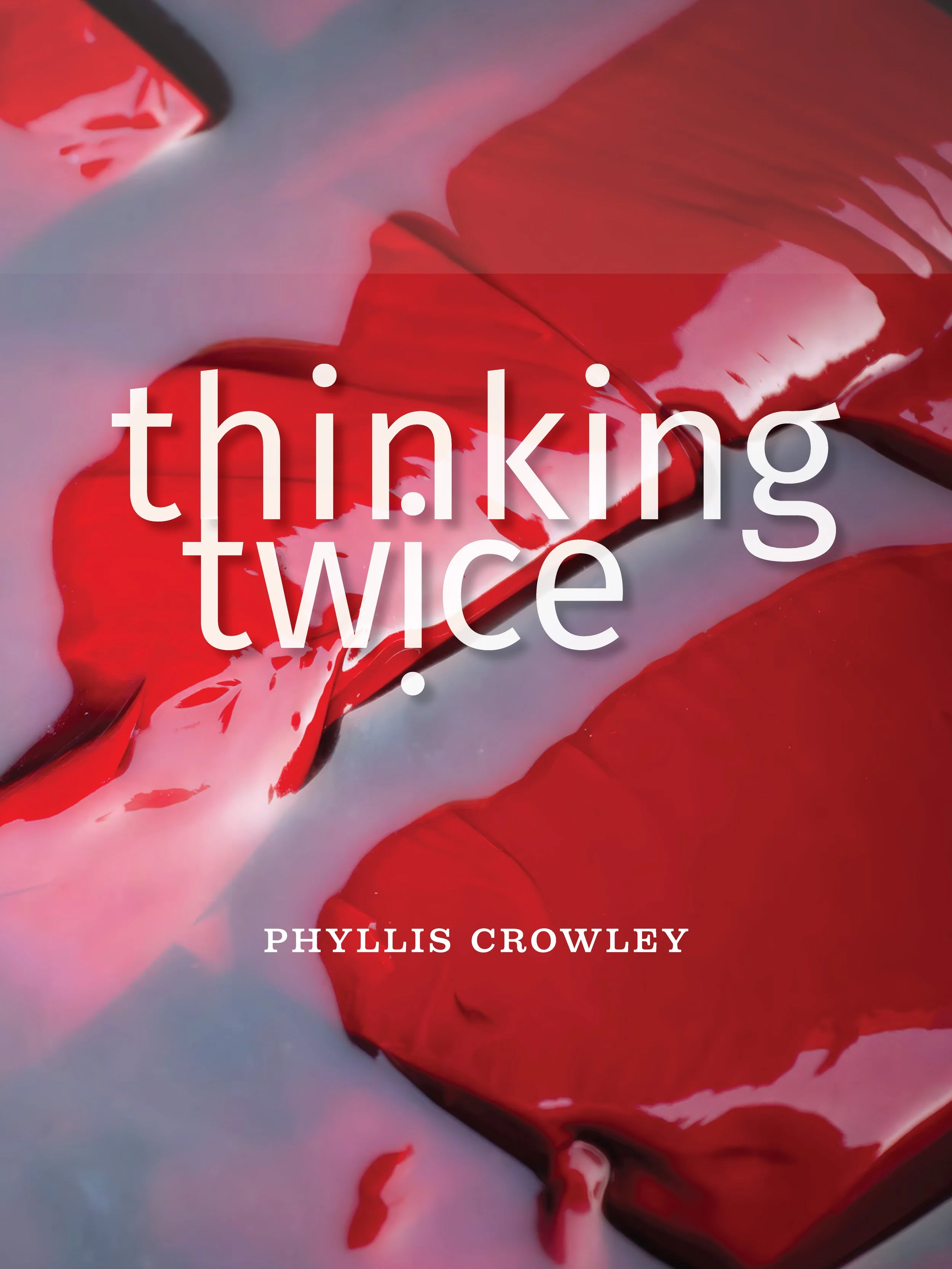
by Phyllis Crowley
Thinking Twice is a provocative photographic meditation on food, beauty, and ethical tension. Over a decade of travel through markets in Asia, Europe, Mexico, and the United States, photographer Phyllis Crowley captured intensely cropped images of meat, fish, and organic matter that hover between abstraction and documentation.
Devoid of conventional context, these photographs seduce the eye with sumptuous color, pattern, and texture, only to reveal—upon closer inspection—the raw realities of consumption, mortality, and environmental strain. Essays by critic Zachary Fine and artist-curator Deborah Hesse frame the work within broader conversations about the “ugly sublime,” sustainability, and the cultural rituals surrounding food.
Neither didactic nor purely aesthetic, Thinking Twice challenges viewers to hold opposing truths at once: attraction and repulsion, beauty and violence, nourishment and loss. The result is a powerful visual experience that asks us to look beyond the plate and reconsider how food reflects our values, cultures, and relationship to the natural world.
Case Laminate Hardcover: $49.99
8.5 × 11 in. (21.59 x 27.94 cm)
90 pages
62 photographs
Imprint: OctoberWorks
LCCN: 2025920526
ISBN: 978-1-959262-09-1
BISAC: PHO023040 [Photography/Subjects & Themes/Landscapes]; DES001000[Design/Book]

by Jeanne Criscola
Period.
Hardcover List Price: $42.99
Softcover: $30.00
8.5 x 8.5 in. (21.59 x 21.59 cm)
112 pages
Imprint: OctoberWorks
ISBN: 978-17321801-2-3 (Hardcover)
ISBN: 978-0-692-64305-1 (Softcover)
BISAC:
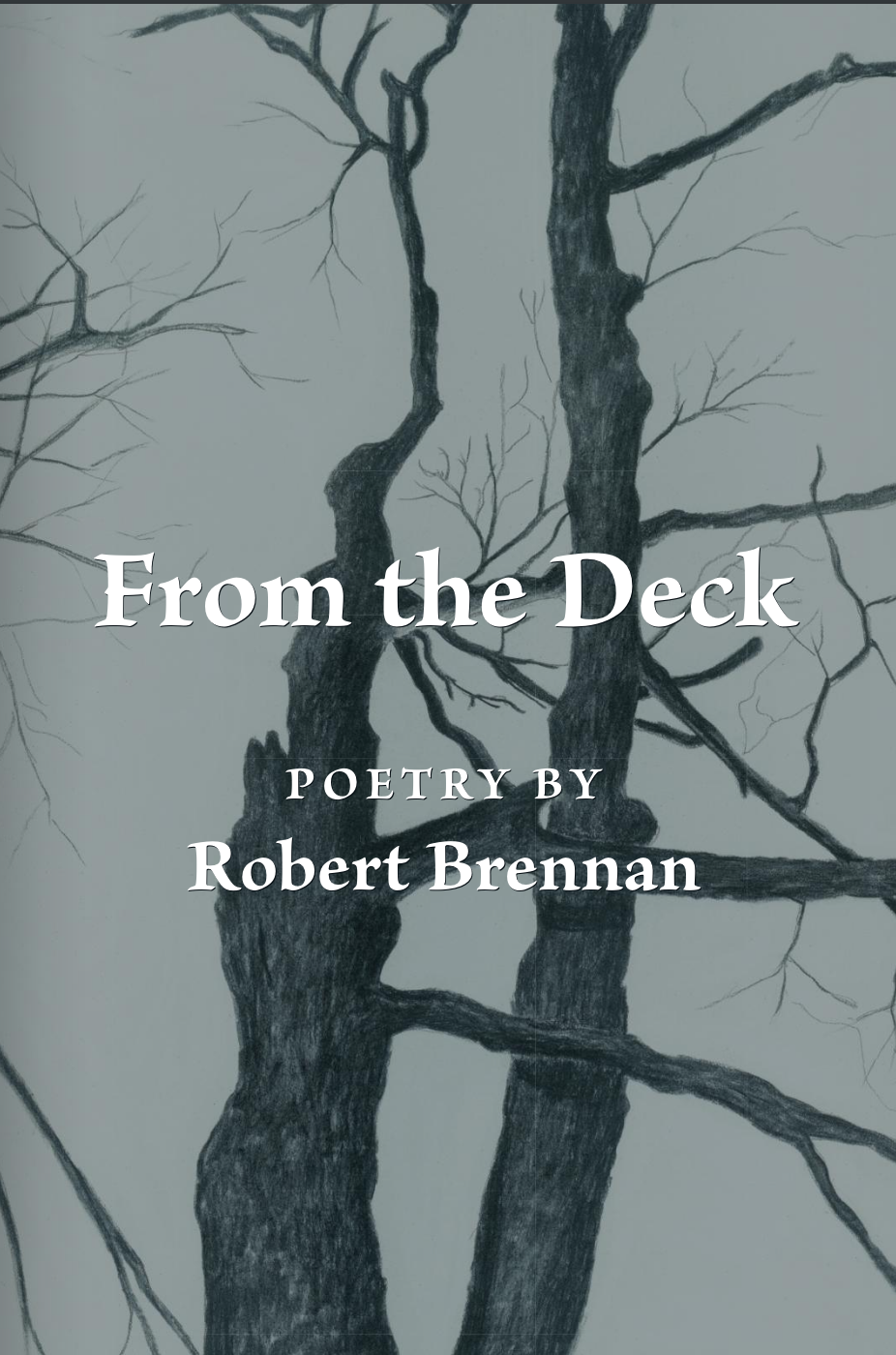
A Book of Poetry and Drawings
by Robert Brennan
Countless schemes for organizing this book have come and gone: themes, perhaps, those about nature, followed by comments on the plights of mankind, love, sadness, humor, politics, and others.
Upon reflection, Robert Brennan realized that such an order did not reflect the characteristics of how he writes or how he thinks or, in fact, how the world unfolds before his eyes. In truth, His afternoon walks along the road that has inspired words about aging against a sunset differ from those inspired by the moving in and out of sadness in the evening news.
As in everyman's mind, the flow is steady and varied and punctuated by moments of lucidity and wonder, by moments of fear and anguish and peacefulness and great sorrow and all elements of human thinking and feeling.
Still, while each of us experiences periods in our lives of prolonged states of mind and heart, as when we are heartbroken over the loss of a loved one, life in its totality is — for good or for bad — a moving screen.
This book is not arranged in categories. There might be pages near each other that are similar in content and tone. In other cases, the subject from one page to the next might be radically different. It is intended that each page stands on its own, which again, for good or bad, more faithfully reflects how my poems arise.
Recognizing that some structural order is needed, I have chosen the one that is the most dependable and familiar of all: chance, pure, unadulterated chance. Arbitrariness follows. The fact that it is totally arbitrary, in this case, is something that we all will have to live with; however, in a special irony, although the actual content of the work is arranged arbitrarily, the pages of the book are more or less in alphabetical order. Go figure. Here is the ultimate orderliness, sparing with ambiguity, like a challenge. Read on.
Hardcover: $27.99
6.14 × 9.21 in. (15.5956 cm x 23.3934 cm)
Perfect Bound
262 pages
57 artworks
Imprint: OctoberWorks
LCCN: 2024914975
ISBN: 978-1-959262-08-4
BISAC: POE000000 [Poetry/General]

by Phyllis Crowley
The Asian Series is a fine art book of photographs taken mainly in China and the Far East. The images reflect an Asian influence, as does the book design. The partially abstract images are meant to speak for themselves.
Exhibitions of the Asian Series photographs:
Silk Road Gallery, New Haven, CT, “Elsewhere” | 2016
Silk Road Gallery, New Haven, CT, “The Asian Series” | 2015
Garner Center for Photographic Exhibitions, Boston, MA, “The Asian Series” | 2014
Hardcover: $45.99
8 x 10 in. (20.32 x 25.4 cm)
Perfect bound
Full color bleed
68 pages
Imprint: OctoberWorks
ISBN: 978-17321801-1-6
BISAC: PHO023040 [Photography/Subjects & Themes/Landscapes]; DES001000[Design/Book]
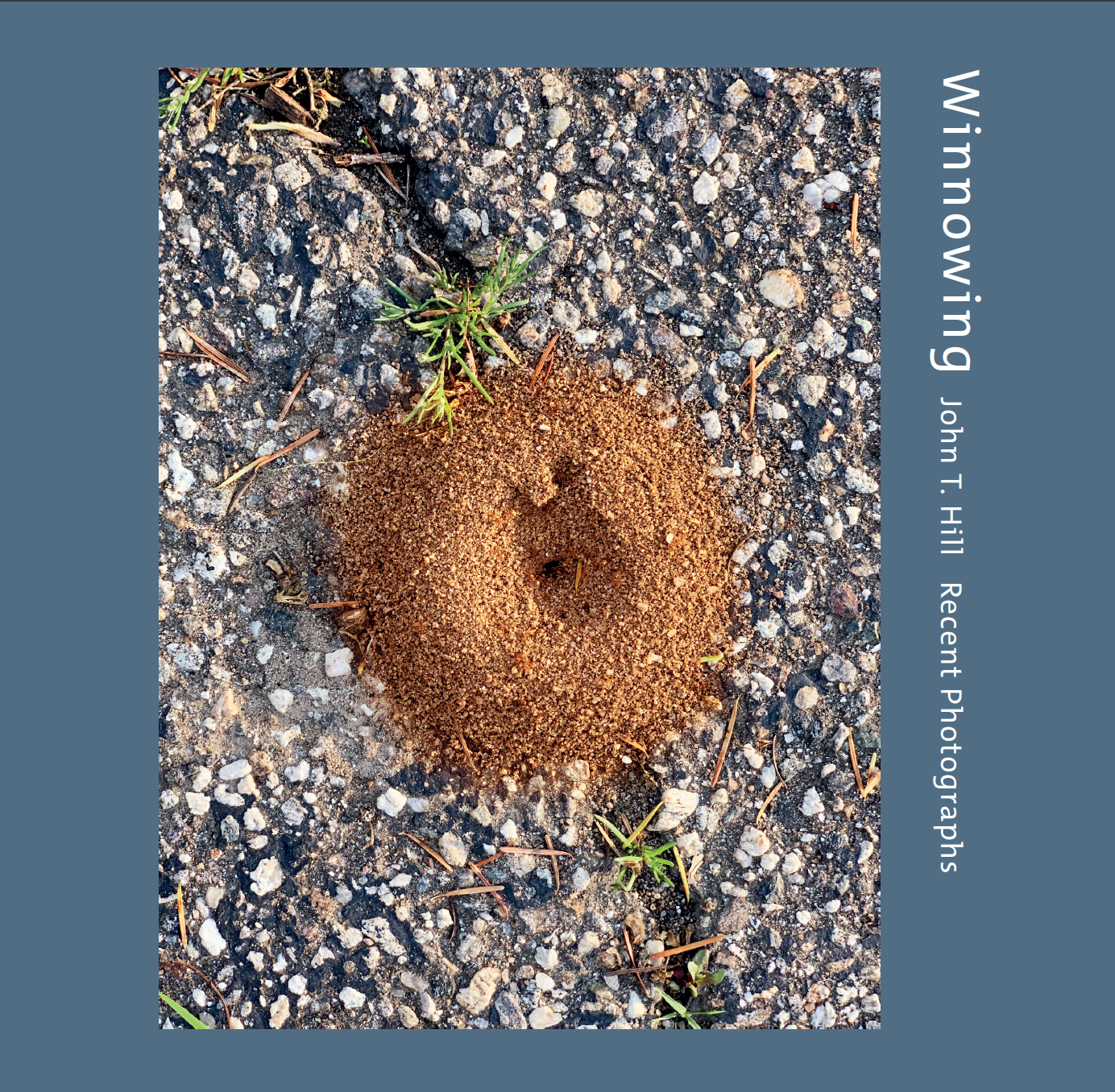
Published in a limited edition by OctoberWorks. Inquiries regarding future editions, rights, and expanded distribution are welcome.
Winnowing: Recent Photographs by John T. Hill presents a selection of photographs made over recent years by photographer, designer, educator, and author John T. Hill. Known for a career spanning photography, design, architecture, and visual education, Hill approaches the camera as a tool for sustained observation rather than spectacle. The book brings together images distilled from decades of looking, revealing unexpected relationships among light, form, texture, landscape, and the built environment.
Rather than functioning as a retrospective, Winnowing offers a focused examination of Hill’s continuing practice and evolving vision. The photographs invite close looking and contemplation, encouraging readers to discover beauty and meaning in ordinary places and fleeting moments.
Created for photographers, artists, designers, students, and general audiences, the book extends Hill’s lifelong exploration of seeing as both a creative act and a way of understanding the world.

by Jeanne Criscola & Joan Fitzsimmons
A Mouth Full: The Re-Cookbook takes the archetypal cookbook beyond images of food and recipes that make your mouth water. It’s a prototype for rethinking what a cookbook evokes and what it can become—a place where the mind can wander through memories of food, recipes, people, and places that make us who we are.
The book concept is a reification of the cookbook and a collection of art, photographs, posters, and ephemera centered around two artists and colleagues conversations about family, food, and recipes fused together with memories and the places they came from. As the artists/colleagues examined the evolution of their personal collections—from the clippings, award-winning heirlooms, homespun recipe booklets, to Internet screen grabs—they found relationships to time and space, embedded essences, deep connections, and well—to be perfectly frank—someone to listen to their stories of special occasions, awkward holidays, and family drama, and more. One’s memories include a cardboard box salvaged from some gift filled with a random selection of clipped recipes. For the other, recipes and images of winners in 1950’s bake-off cookbooks have inspired projects where family secrets and financial gain are traded and revealed.
Hardcover List Price: $49.99
11 x 8.5 in. (27.94 x 21.59 cm)
Full color bleed
140 pages
225 photos and ephemera
60 recipes
Imprint: OctoberWorks
ISBN: 978-1-7321801-3-0
BISAC: CKB127000 [Cooking/Comfort Food]; ART023000 [Art/Popular Culture]; DES001000 [Design/Book]; FAM002000 [Family & Relationships/Activities]

by Susan Newbold
The dictionary definition of reverie is a state of being pleasantly lost in one’s thoughts. This book Reveries: Journaling in Place is the result of careful editing of Susan Newbold’s twenty-five artist journals containing images which were an attempt to capture her reveries which she wanted to share. These images come from international and national locales where the author has lived or traveled, and each have unique qualities. Newbold teaches a course called “The Illuminated Journal” — a workshop which combines painting, printmaking, drawing and writing and ends in a handmade journal which the students each create. The practice of journaling has been an important part of her art making which she is eager to share with the readers of this book.
Hardcover w/ DustJacket: $75
12 x 9 in. (30.48 x 22.86 cm)
Full color bleed
164 pages
115 artworks
Imprint: OctoberWorks
ISBN: 978-1-7321801-6-1
BISAC: ART016010 ART [Individual Artists/Artists' Books]; ART010000 ART [Techniques/Drawing]
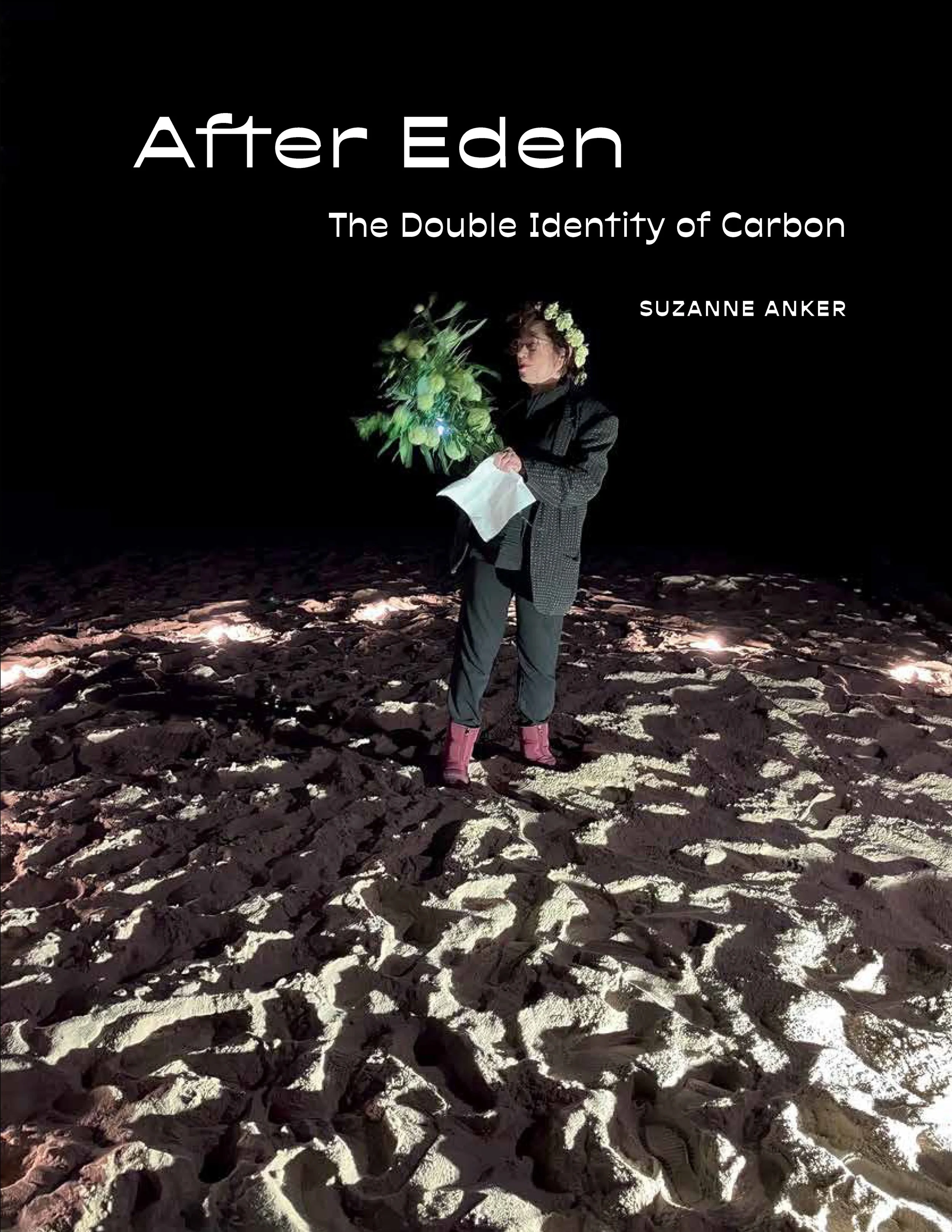
by Suzanne Anker
No matter in how orderly a way we may attempt to plan our future, uncertainty will meddle.
The series of photographs and collages collected in this volume began at the dawn of the COVID-19 pandemic.
It commenced as a chronicle of the natural space confined within the bounds of the observer’s home garden. The exploration originated as the unbiased witnessing of seasonal rhythms as they altered a rich microcosm made of plants, flowers, and trees.
SOFTCOVER List Price $45
8.5 x 11 in. (21.59 x 27.94 cm)
Full color bleed
186 pages
75 artworks
Imprint: OctoberWorks
ISBN: 978-1-959262-05-3
LCCN: 2023918700
BISAC: ART016010 [Individual Artists/Artists' Books]
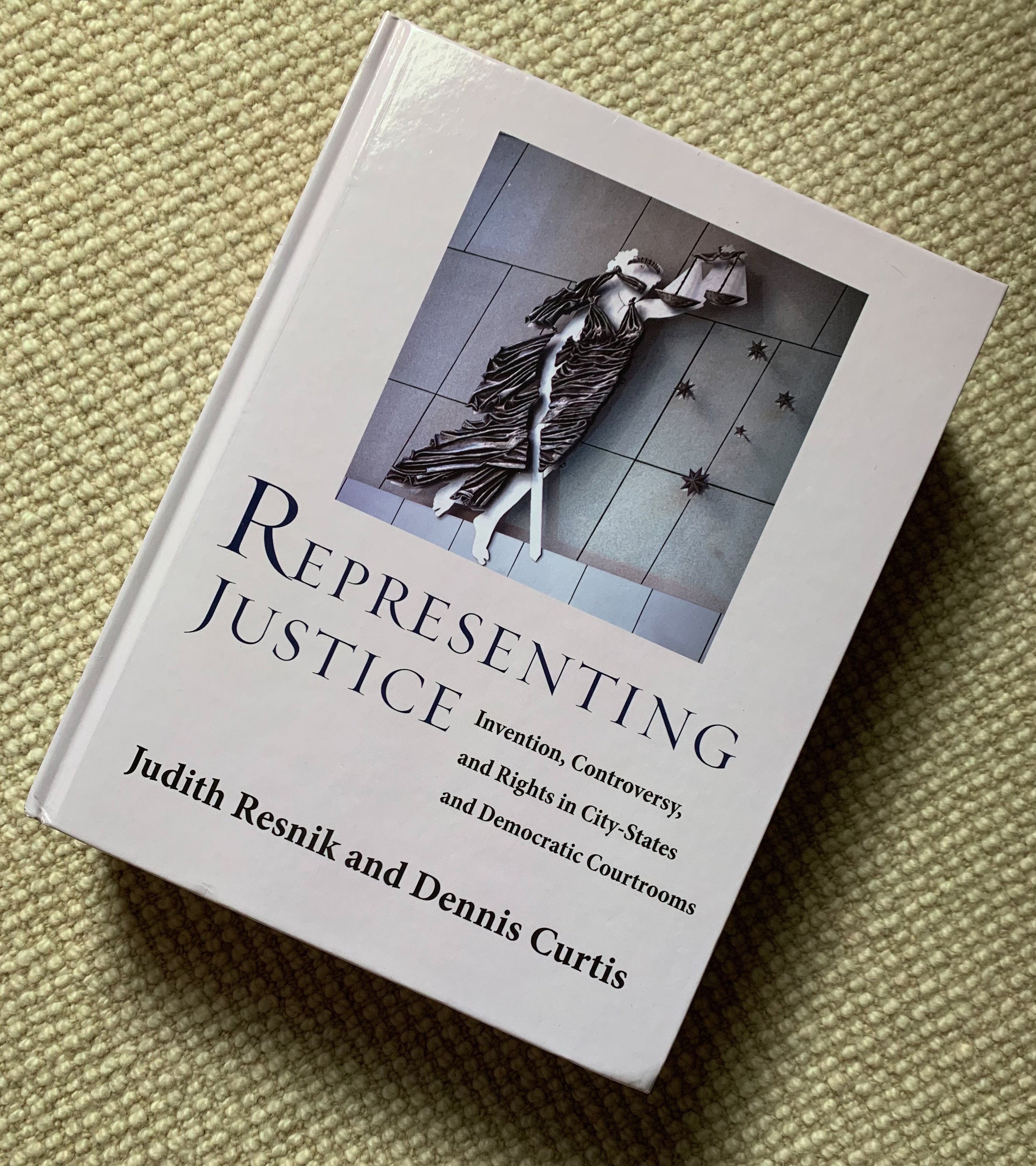
Invention, Controversy, and Rights in City-States and Democratic Courtrooms
by Judith Resnik and Dennis E. Curtis
By mapping the remarkable run of the icon of Justice, a woman with scales and sword, and by tracing the development of public spaces dedicated to justice—courthouses—the authors explore the evolution of adjudication into its modern form as well as the intimate relationship between the courts and democracy. The authors analyze how Renaissance “rites” of judgment turned into democratic “rights,” requiring governments to respect judicial independence, provide open and public hearings, and accord access and dignity to “every person.” With over 260 images, readers can see both the longevity of aspirations for justice and the transformation of courts, as well as understand that, while venerable, courts are also vulnerable institutions that should not be taken for granted.
HARDCOVER List Price: $112.99
Imprint: OctoberWorks
ISBN: 978-1-7321801-8-5
LCCN: 2022909426
BISAC: ART037000 [Art & Politics]; ART009000 [Criticism & Theory]; LAW025000 [Law, Courts]


The City and Its Workers at New Haven’s Gun Factory
by Joan Cavanagh
From the late 19th century through the early 21st, the Winchester Repeating Arms Company was an important employer in New Haven, Connecticut. The legendary guns it produced and their role in American expansionism at home and abroad were celebrated, largely uncritically, in movies, books, and songs. But the stories of those who worked there and of the company’s impact on its host community have received little attention.
The tale includes elements familiar to students of United States economic, social and labor history: workers’ struggles to win collective bargaining rights and to achieve equity in the work place across all job classifications, ages and ethnicities; relentless management efforts to divide them and prevent, then undermine, union representation; a ruthless company’s repeated threats to leave town in order to force union concessions and win economic incentives and tax abatements from city government; and the gentrified aftermath of the loss of working class jobs in an American city.
The story of New Haven’s experience unfolds in Our Community at Winchester through interviews with former workers and their families as well as material from union newsletters, archival records, and city publications.
Case Laminate Hardcover: $38.99
8 x 10 in. (20.32 x 25.4 cm)
170 pages
138 illustrations, photos, ephemera
Imprint: OctoberWorks
ISBN: 978-1-7321801-5-4
BISAC: POL013000 [Political Science/Labor & Industrial Relations]; NHIS054000 [History/Social History]

How a group of small-town activists and college students set out to change healthcare
by Charles Barber
Peace & Health is the story behind this improbable effort: the 20-year-old who plants the flag in his small hometown of Middletown, Connecticut; the daughter of a sharecropper, who made her way north during the great migration and becomes the North Star of the drive to transform health in the community; the son of a Jewish émigré and pharmacist who breaks from his peers to support the cause; the musician who played in the big bands of the South in the 1930's, who loses his teeth and is now determined to make sure others do not lose theirs; and the college student and future US Senator who helps buy the building so the free clinic would not be shut down permanently. A young nurse-practitioner joins the organization as it expands beyond one Connecticut town, and today, Community Health Center (CHC) and its Weitzman Institute operate programs across the US, transforming the delivery of health care for populations who have been ignored.
READ THE REVIEWS
Midwest Book Review | Review
Kirkus | Review
Publisher’s Weekly | Takeaway: The fascinating story of Connecticut’s Community Health Center, a visionary free clinic. Production Grades: Cover: B+ | Design and typography: A | Illustrations: A | Editing: A | Marketing: A-
Paperback: $43.99
Ebook: $7.99
8.5 x 11 in. (21.59 x 27.94 cm)
178 pages
199 illustrations
Imprint: OctoberWorks
Paperback ISBN: 978-1-959262-02-2
Ebook ISBN: 978-1-9592620-1-5
LCCN: 2022916116
BISAC: BUS070170 [Business & Economics]; MED039000 [Medical, Health Care Delivery]
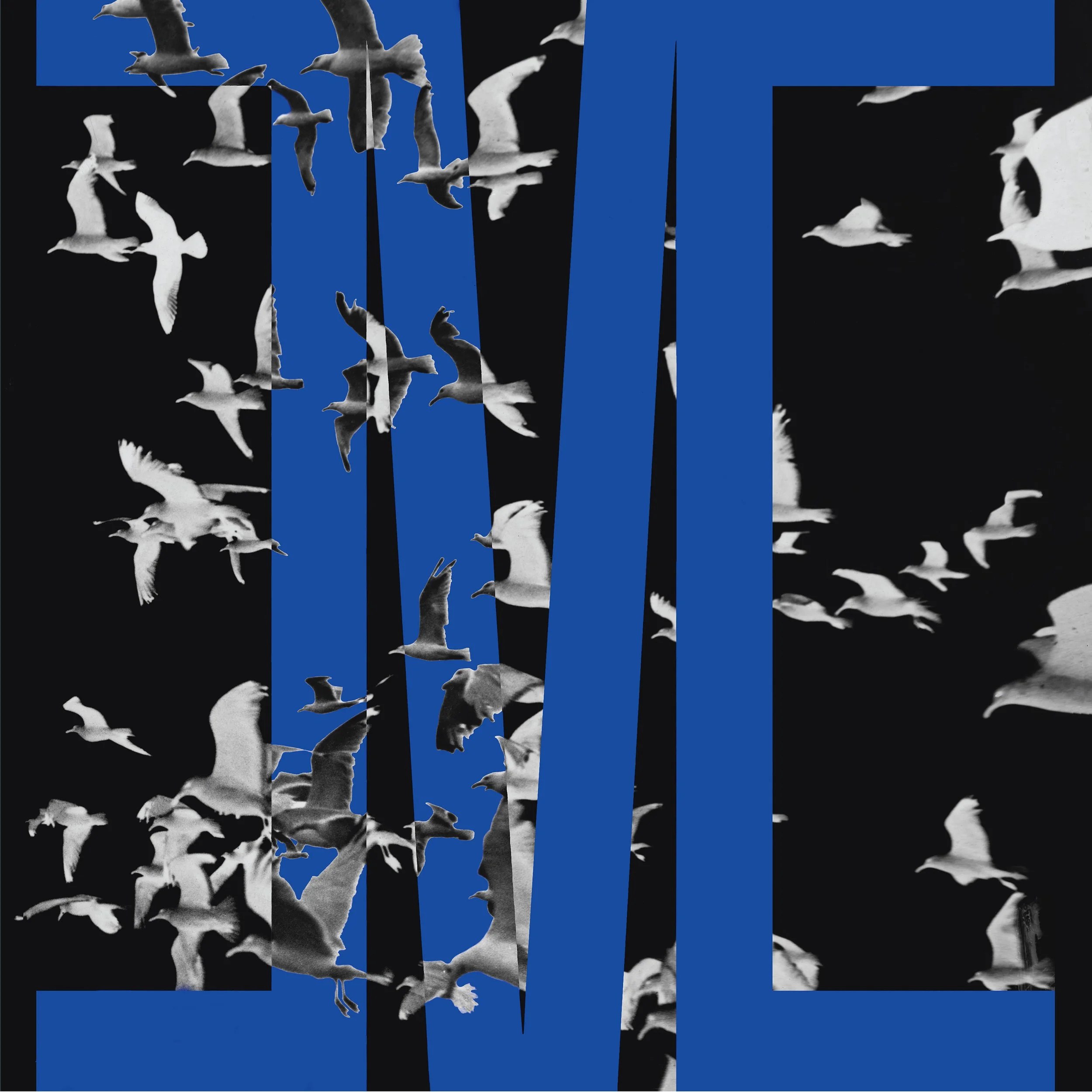
Published in a limited edition by OctoberWorks. Inquiries regarding future editions, rights, and expanded distribution are welcome.
Herbert Matter: Artist Magician is a 302-page limited-edition monograph published by OctoberWorks documenting the life and work of modernist designer and photographer Herbert Matter. Featuring approximately 390 images, the project combines design history, memoir, archival preservation, and contemporary publication design through the decades-long relationship between Herbert Matter and author John T. Hill, who studied and taught alongside him at Yale University.

Cómo un grupo de activistas de una pequeña ciudad y estudiantes universitarios propusieron cambiar la atención médica
By Charles Barber